Reverse Osmosis vs. Carbon Filters: Which One Is Actually Worth Buying?
The two most common home filters work by different mechanisms, remove different things, and fail differently. The certification listing — not the box copy — decides which one deserves your money.
By Max — Founder, builder of TapGraded's EPA data pipeline · July 15, 2026 · Updated July 18, 2026
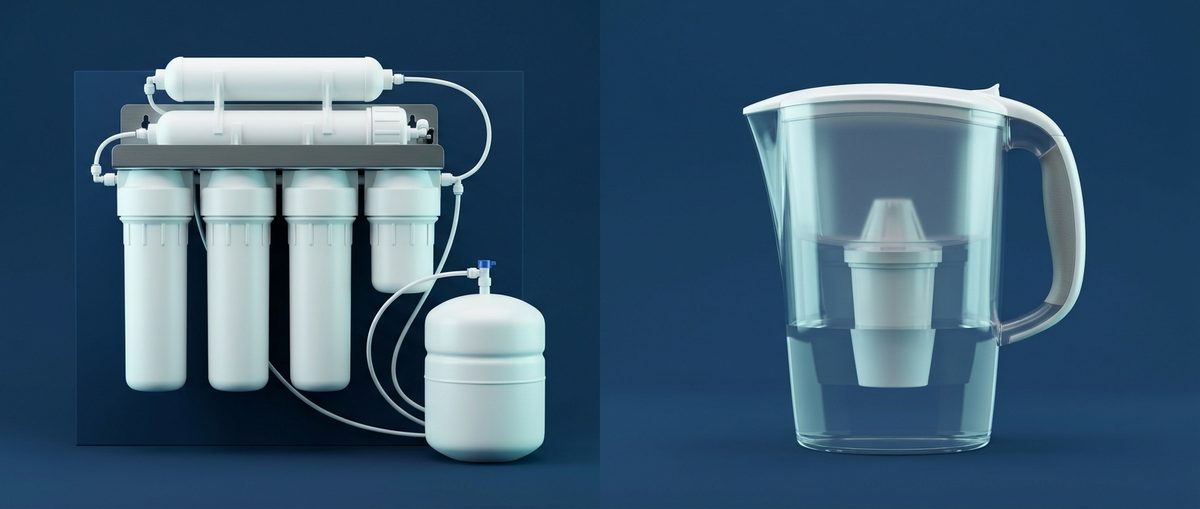
Which one deserves your money: the carbon pitcher on the store shelf, or the under-sink reverse osmosis system that costs many times as much? Wrong question, actually. The right one is: what, specifically, is in your water? — because “water filter” covers two different technologies that remove different things, and the most expensive mistake in home water treatment is buying the impressive one when the cheap one covered your case, or the cheap one when it never could.
One more possibility the sales aisle won’t mention, but the CDC will: if your tap water doesn’t contain harmful germs or chemicals, you may not need a filter at all. Test first. Then shop.
The claim vs. the evidence
The claim is on the box: “removes up to 99% of contaminants.” The evidence is the NSF/ANSI certification listing — an independent test of a specific model against specific contaminants. The CDC’s advice for choosing a filter comes down to the same move: check the label for the exact substances the product is certified to remove, and look the model up in the NSF database. If the contaminant you care about isn’t on the model’s listing, that filter is not certified to remove it, whatever the box implies.
The standard numbers to know:
- NSF/ANSI 42 — aesthetics: chlorine taste and odor. Not a health claim.
- NSF/ANSI 53 — health effects: lead, cysts, certain organics — but only the contaminants named on that model’s listing.
- NSF/ANSI 58 — the reverse osmosis standard.
- NSF/ANSI 401 — emerging contaminants; PFAS reduction claims are certified under their own listings.
How the two technologies actually differ
Activated carbon works by adsorption: contaminants stick to an enormous internal surface area as water flows past. It’s the technology in nearly every pitcher, faucet-mount, and fridge filter. The CDC’s blunt description: these filters’ main purpose is to improve the taste and smell of water, rather than its safety — unless a given model is certified under Standard 53 for a named health contaminant. A 53-certified carbon filter for lead is real evidence; “carbon filter” on the box is not.
Reverse osmosis pushes water through a semi-permeable membrane whose rejections are broad rather than selective. Per the CDC, RO removes parasites, bacteria, and viruses, plus chemicals including lead, copper, chromium, chloride, and sodium, and may also reduce arsenic, fluoride, radium, sulfate, nitrate, and others — model listings still control. Carbon, by contrast, is not a germ barrier at all in its common formats.
The match-ups that matter
- Chlorine taste and odor only: a Standard 42 carbon filter is the cheapest thing that works. Buying RO for a taste problem is paying membrane prices to fix what adsorption fixes.
- Lead (confirmed by a tap test): either technology can win — RO under Standard 58, or a carbon filter certified under Standard 53 for lead specifically. See the lead filter guide.
- PFAS (confirmed): the EPA’s treatment research says granular activated carbon can be 100% effective “for a period of time” — it works best on long-chain PFAS like PFOA and PFOS, and its performance depends on flow rate, carbon depth, and what else is in the water. High-pressure membranes (RO and nanofiltration) test at more than 90% effective across a wide range of PFAS, including the short-chain compounds carbon handles less well. Details in the PFAS filter guide.
- Arsenic, nitrate, fluoride: dissolved inorganics are membrane territory. Ordinary carbon does little here.
- Germs: match the pore size to the organism — cyst-rated (53/58) or absolute 1-micron filters for parasites, ultrafiltration or better for bacteria, nanofiltration or RO for viruses. People with weakened immune systems should look for cyst-rated filtration and talk to their healthcare provider, per the CDC.
The trade-offs nobody puts on the box
RO’s costs: the membrane rejects good and bad alike — the CDC notes filters take out beneficial chemicals like fluoride along with the bad ones — and the process sends reject water down the drain, so an RO tap produces less water than it draws. It’s the most capable option on the list and the most wasteful one.
Carbon’s catch is hiding in the EPA’s own praise: “100 percent effective for a period of time.” Adsorption surfaces fill up. A carbon cartridge past its replacement date isn’t a weaker filter — it can be no filter at all. The whole technology is only as good as your replacement schedule, and the CDC adds a hygiene note people skip: wear gloves when changing cartridges, because the old one holds exactly what it caught.
One for the whole-house shoppers: a point-of-entry filter that strips chlorine means more germs may grow in your plumbing afterward. Dechlorinating every pipe in the house has a downstream cost the brochure doesn’t itemize.
And neither technology softens water — scale is a different problem with a different tool, which we’ve covered in hard water vs. unsafe water.
The verdict, with conditions
- Taste and odor complaints, nothing confirmed: Standard 42 carbon. Cheapest fix that’s certified for the job.
- A confirmed contaminant with a 53-certified carbon option: carbon wins on cost — if you’ll actually keep the replacement schedule. Be honest about that.
- Dissolved inorganics, short-chain PFAS, viruses, or several problems at once: RO earns its price.
- Nothing confirmed at all: no purchase. Test first — your utility’s record is on its contaminant pages, and the filter match tool maps whatever you find to the certified filter types for it.
The technology doesn’t make the filter trustworthy. The listing does.
Sources
- NSF — “Contaminant Reduction Claims Guide” — https://www.nsf.org/consumer-resources/articles/contaminant-reduction-claims-guide
- Centers for Disease Control and Prevention — “About Choosing Home Water Filters” — reviewed April 10, 2024 — https://www.cdc.gov/drinking-water/prevention/about-choosing-home-water-filters.html
- US EPA — “Reducing PFAS in Drinking Water with Treatment Technologies” — https://www.epa.gov/sciencematters/reducing-pfas-drinking-water-treatment-technologies
- US EPA — “National Primary Drinking Water Regulations” — https://www.epa.gov/ground-water-and-drinking-water/national-primary-drinking-water-regulations
Source: Regulatory facts cited inline against EPA sources; see Methodology & Data sources · Data as of July 18, 2026
This article is informational and is not health, legal, or engineering advice. Questions or corrections: contact@tapgraded.com.